Latest Trends in Cutting Machinery: What’s Shaping the Industry in 2026
Follow Us
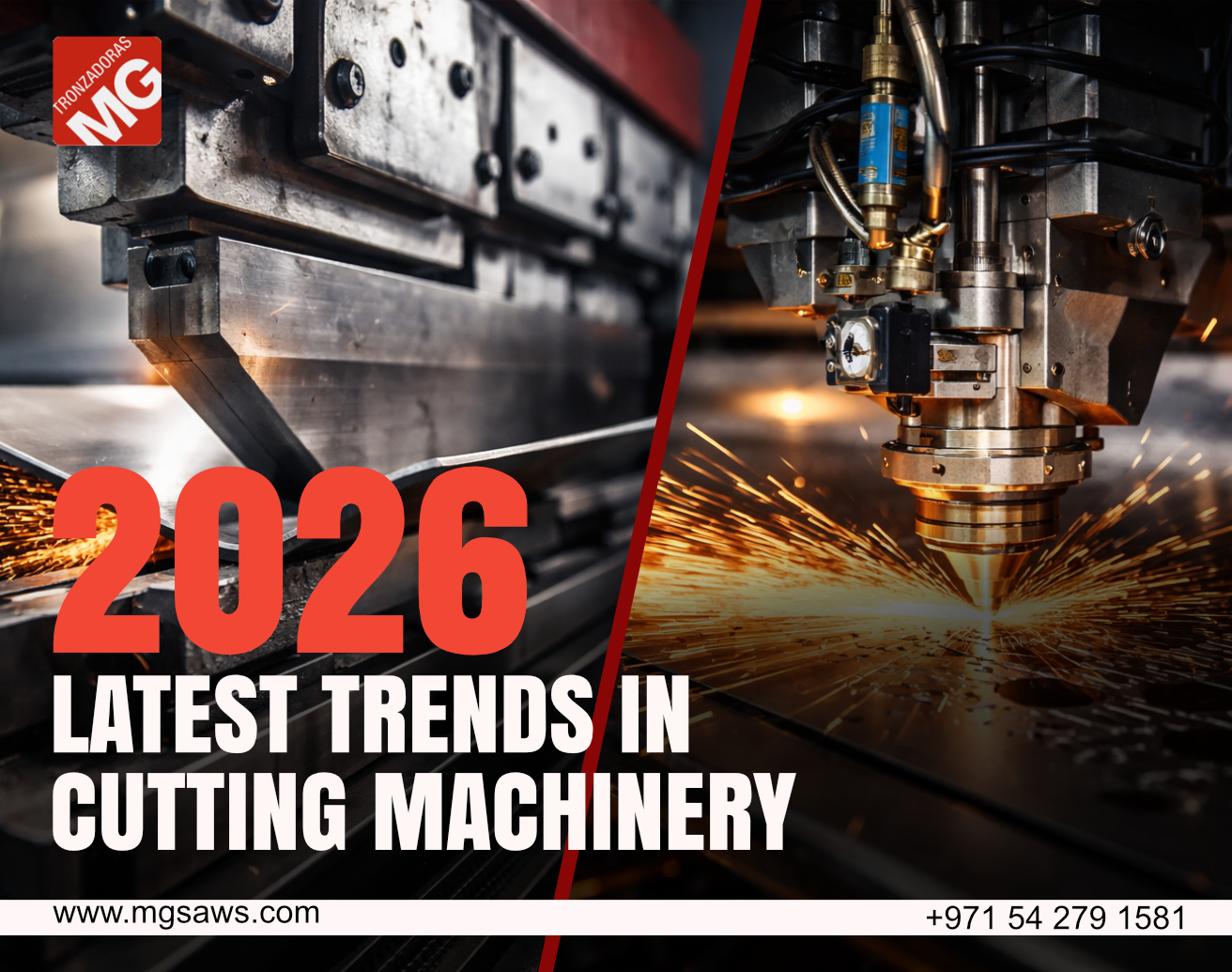
Modern cutting technology has moved far beyond its mechanical beginnings. From being a measure of raw power and the experience of the operator, cutting has moved towards being a measure of speed, variability, and intelligence. Whether it is the promise of AI technology installed within lasers or the promise of eco-friendly waterjets, cutting technology is moving forward in multitude ways. The largest trends in cutting machines for 2026 are listed below.
1. AI and Smart Automation: The Brainpower Behind the Equipment
The most revolutionary shift that has come into cutting machinery is probably Artificial Intelligence, or Automation. These technologies are not just add-ons; they’re becoming an integral part of new cutting machines. Furthermore, control systems that utilize AI technology are capable of adjusting cutting parameters such as speed, power, focus, and motions as per the material type and thickness without compromising on quality. These control systems are particularly effective with CNC Laser Cutting Machines, as they consistently maintain quality and eliminate wastes using AI technology. These AI control systems are also effective in providing predictive maintenance of the machines, thereby saving costs.
But across the spectrum of cutting technologies, the drive towards connectivity - what many refer to as Industry 4.0 integration - opens up the potential for machines to share performance data in real time, sharpen maintenance planning and fuel advanced analytics that help make smarter manufacturing decisions.
2. High-Speed and Precision Lasers Take Center Stage
Laser cutting technology is fast - evolving, and for the year 2026, it remains at the forefront with fiber lasers. In comparison to the more mature CO₂ lasers, these fibre systems provide better energy efficiency, faster cuts, and cleaner edges - the perfect advantages applied to automotive and aerospace sectors.
These newer lasers can cut intricate shapes with exceptional precision, shortening production timelines while keeping tight tolerances. They're also more energy-efficient, appealing to businesses pursuing sustainability targets or watching energy costs. Automation continues to push laser cutting further. Material loading and unloading can be left entirely to robots, which means that lights - out manufacturing besides greatly reduced human oversight is possible.
3. Water Jet Cutting: Precision with No Heat
Water jet cutting technology appears to be gaining popularity as a true "cold cutting" technology, as it can be used to cut just about any material, whether it is metal, glass, composites, stone, or a number of other materials, without causing damage to them due to heat. Unlike other cutting techniques such as plasma or laser cutting, water jet cutting technology does not cause distortion.
Some notable developments in water jet technology include:
- 5-axis water jet machines which enable 3D cutting and beveling, thereby making them appropriate for use in the aerospace, architectural, and industrial industries.
- Hybrid techniques that combine the water jet with laser or plasma, to offer manufacturers enhanced flexibility in the methods used in the cutting process.
- Smart controls that can make diagnostics more efficient, monitor machines more effectively, and even perform automatic tweaks to maximize efficiency.
- Smaller, more transportable water jets are able to enter shops and onsite jobs, which expands its overall associativity.
4. Sustainability and Eco-Friendly Practices
Sustainability is a necessity, not a choice. Cutting equipment manufacturers are meeting this need by providing solutions to save power, resources, and to be more sustainable and green.
Waterjets rely on water plus recyclable abrasive media, and fresh closed-loop recycling loops dramatically reduce the amount of water consumed per cycle. Meanwhile, laser cutters are being engineered to draw energy more efficiently and reduce overall power consumption. Software tools-including smart nesting algorithms-help to arrange cut paths in such a way as to minimize waste and maximize material sheet utilization.
5. Multi-material and multi-process capability
Today's manufacturing is increasingly characterized by complex assemblies made from a combination of metals, composites, plastics, and advanced alloys. Cutting machines are continuing their development to address the demand: multi-material cutting can allow for one system to work with various substrates, reducing the number of multiple machines needed to accomplish that work and smoothing workflow. Hybrid machines that combine various cutting processes-such as waterjet plus laser or plasma-provide manufacturers with flexibility in choosing the proper process for each segment of a project and also improve productivity and versatility.
6. Robotics and Collaborative
Systems Robotics are gaining much grip when it comes to cutting applications. With cutting heads mounted on these precise robotic arms, one can deal with irregular shapes, 3D surfaces, and adaptive movement paths. Combined with AI, these robotic systems can hit high precision with limited human interaction, which is an important advantage in the realm of high-mix, low-volume environments.
Conclusion
A Smarter, Greener, and More Versatile Future
It is 2026, and cutting machinery has never been more able, networked, or intelligent. It starts with AI-enabled controls, fast fiber lasers, flexible waterjet machines, innovation in sustainability, and robots that fit together smoothly. Today’s cutting products are empowering manufacturers to design products more efficiently, changing the way people make products around the globe. They provide efficiencies such as reduced waste, heightened up time, working with complex materials, and more.To witness the latest cutting machinery and their technology, there is none other than Tronzodoras MG in the Europan region